Strategic Shifts in AI Data Center Investments Impacting Future Growth

Key Takeaways

  • AI data center investments are rapidly evolving, driven by technological advancements.
  • Sustainable cooling infrastructure is vital for efficiency and performance.
  • Understanding market dynamics is essential for strategic investment decisions.
  • In-depth research and analysis can provide a competitive edge for investors.

The rise of AI technologies is reshaping the data center landscape, driving significant investments and facing unique infrastructure challenges. This article dissects the current market dynamics and cooling infrastructure issues influencing these investments, offering critical insights for decision-makers in private equity, corporate strategy, and professional services.

Overview of AI Data Centers and Current Investment Landscape

The emergence of AI data centers marks a significant milestone in the technology landscape, driven largely by the surging demand for AI processing capabilities. According to recent forecasts, the global AI data center market is expected to grow by over 40% annually, reaching approximately $200 billion by 2026. This explosive growth is propelled by the increasing adoption of AI applications across various industries—from healthcare to finance—necessitating substantial computational resources.

AI data centers differ from traditional facilities primarily due to their architecture and scalability. Many leverage hyperscale infrastructure, designed to support massive workloads and rapidly shifting demands. Furthermore, edge data centers are becoming critical, offering low-latency solutions for AI applications deployed closer to users. Such deployments require particular attention to power infrastructure, as AI applications can demand up to 10 times more power than traditional applications. This demand exerts pressure on existing electrical grids and necessitates innovative energy sourcing strategies, as detailed in the Data Center Power Play report.

Recent technological innovations in cooling systems, such as immersion cooling and advanced air cooling methods, cater to the high thermal density associated with AI workloads. These innovations not only enhance energy efficiency but also mitigate cooling costs, critical for investors assessing operational margins. Given the unique operational challenges posed by AI workloads, understanding these cooling solutions is essential for due diligence processes in investment assessments. Investors should also explore the findings in the Data Center Cooling Crunch report to grasp the evolving thermal management landscape.

Overall, the current investment landscape for AI data centers presents a compelling case for stakeholders. Strategic positioning and understanding geographic demand centers will be pivotal. High vacancy rates in certain markets indicate potential investment opportunities, while the pace of new supply coming online—impacting absorption rates—will shape competitive strategies. Investors must take a holistic view of these dynamics to effectively evaluate AI data center assets, as outlined in the Data Center Market Overview report.

As AI data centers proliferate, they face increasing pressure to manage thermal density effectively. This demand stems from the rising energy consumption required to support AI workloads, amplifying the urgency for innovative cooling solutions. Cooling infrastructure must evolve to match the high power requirements of AI applications, particularly around GPU technology, which generates significant heat. Traditional air cooling methods often fall short in these environments.

In contrast, liquid and immersion cooling techniques are gaining traction due to their superior efficiency. Liquid cooling systems can reduce energy usage by up to 40% compared to air cooling, making them a more sustainable choice for data center operators. Additionally, these systems can handle dense configurations, addressing thermal density challenges effectively. Investors seeking optimized operational costs should review the Data Center Cooling Crunch report, which highlights the implications of thermal management technology adoption.

Moreover, sustainability metrics are becoming paramount as regulatory pressures increase. Many firms are investing in energy-efficient cooling solutions that leverage AI for predictive maintenance and real-time monitoring, thus improving operational efficiency. AI-driven analytics can optimize cooling cycles, substantially lowering the carbon footprint of data center operations. For example, companies employing these technologies have reported a 20-30% reduction in energy consumption.

The shift toward modular construction techniques also facilitates the deployment of advanced cooling solutions. Modular builds can be equipped with sophisticated cooling systems designed for rapid scaling, aligning with the fast-paced demands from hyperscalers in AI. The accelerated development timelines resulting from modular approaches could mitigate long-term construction risks related to cooling infrastructure, providing a strategic advantage in asset evaluation.

In summary, the cooling infrastructure landscape is evolving rapidly to meet the demands of AI data centers. Consequently, investors and corporate leaders must assess not only the technical requirements but also the sustainability implications integrated into their operational frameworks to ensure profitability and compliance.

Investment Implications and Strategic Considerations

The rise of AI data centers presents unique challenges influencing investment decisions across the sector. Data center operators must consider increasing power consumption, necessitating enhanced grid infrastructure and strategic energy sourcing. Private equity and venture capitalists should pay attention to these factors when assessing investment risk profiles. The demand for robust energy solutions, such as Power Purchase Agreements (PPAs) and utility partnerships, becomes paramount in addressing potential grid constraints influenced by AI workloads. Investment opportunities surrounding energy sourcing will grow as operators seek sustainable and reliable power solutions, aligning with larger sustainability trends.

Cooling infrastructure stands out as another critical area of concern as AI workloads drive unprecedented heat density within data centers. The choice between air cooling, liquid cooling, and immersion solutions can significantly impact operational efficiency and cost, influencing ROI forecasts for investors. Those analyzing capex requirements should explore the Data Center Cooling Crunch report, which examines thermal management challenges and related expenses. Cooling system parameters can either enhance asset performance or deter potential investors based on cooling strategy effectiveness.

Furthermore, construction timelines for AI data centers can impact overall capital deployment strategies. As demand surges, the race for real estate to house these facilities intensifies. Market dynamics dictate that firms must navigate permitting processes effectively or risk project delays. Corporate strategy teams need to incorporate these factors into their forecasts, especially within markets with high vacancy rates or significant geographic concentration. The implications for investment dynamics extend across various sectors as firms reassess their M&A strategies amid changing construction landscapes, as detailed in the Construction Layer of the AI Data Center Boom report.

Leveraging Research for Informed Investment Decisions

Investors evaluating opportunities in AI data centers must leverage structured research to make informed decisions. High demand for data center capacity, particularly driven by AI, requires nuanced understanding of market dynamics. Utilizing resources like the Data Center Infrastructure Compendium can help outline the interdependencies of power, cooling, and construction, forming the basis of a comprehensive investment thesis.

Personalized market intelligence is vital. Each investor’s strategy may differ based on geographic focus, asset types, or risk tolerance. Advanced competitive analysis provides insights into absorption rates, vacancy trends, and lease pricing, enabling investors to identify underperforming assets ripe for repositioning. For instance, a detailed understanding of regional power infrastructure dynamics, as explored in the Data Center Power Play report, can mitigate risk associated with grid constraints and energy sourcing.

Additionally, cooling technology choices present both challenges and opportunities. The Data Center Cooling Crunch report highlights the importance of addressing thermal density challenges, particularly with the increasing prevalence of AI workloads. Investing in cooling systems that effectively manage heat density can yield significant cost savings and operational efficiencies.

Lastly, understanding construction timelines and supply chain complexities is essential. The Construction Layer of the AI Data Center Boom report outlines factors that could accelerate or delay project execution, impacting cash flow and ROI. Adapting to these parameters ensures that investment strategies remain resilient in a rapidly changing environment.

In summary, investors in the AI data center space must engage with advanced research to uncover insights that inform their decision-making processes. Emphasizing personalized intelligence and competitive analysis will enhance their investment strategies, reduce risk, and capitalize on emerging opportunities.

Related Articles

You might also be interested in:

Conclusions

Investors must navigate complex shifts in AI data center investments, particularly concerning cooling infrastructure. Understanding these dynamics is crucial for informed strategic decisions. For deeper insights and tailored research, consider engaging SeventhBiz for comprehensive market intelligence.

Frequently Asked Questions

What are the main challenges in cooling AI data centers?

The primary challenges include managing heat output from high-density computing and integrating efficient cooling technologies to maintain optimal performance.

How are AI data center investments changing?

Investments are increasingly focusing on sustainable practices and innovative cooling solutions to enhance efficiency and reduce operational costs.

Why is cooling infrastructure important for investors?

Cooling infrastructure is critical as it directly impacts operational efficiency, performance reliability, and overall long-term return on investment.

How can SeventhBiz assist with AI data center investment strategies?

SeventhBiz offers in-depth market research and tailored insights that support informed decision-making on AI data center investments.

Navigating the AI Data Center Boom and Cooling Infrastructure Decisions

Key Takeaways

  • Understand the critical importance of cooling infrastructure in AI data center operations.
  • Recognize trends and market dynamics impacting cooling strategies in high-density AI environments.
  • Evaluate the implications of these trends for investment and corporate decision-making.
  • Consider the value of structured research from SeventhBiz for tailored insights.


The rapid expansion of AI data centers is reshaping the tech landscape, leading to unprecedented demands on cooling infrastructure. This article will delve into the critical choices businesses face in optimizing their cooling systems, the implications of power density, and strategic insights for investors and corporate leaders.

Overview of the AI Data Center Market


The AI data center market has experienced unprecedented growth, driven primarily by rising demand for AI applications and the associated computational power required to support them. In 2022, the global AI data center market reached an estimated value of $7 billion, with projections suggesting it could exceed $38 billion by 2027, reflecting a compound annual growth rate (CAGR) of approximately 32%. This surge illustrates the critical intersection of AI innovation and data center capabilities, highlighting the importance of understanding current market dynamics.

Overview of the AI Data Center Market


Key players in this sector include hyperscalers like Amazon Web Services, Google Cloud, and Microsoft Azure. These companies are rapidly expanding their capabilities, leveraging advanced technologies like machine learning, high-density servers, and edge computing. They also depend heavily on efficient power infrastructure to support their operations, especially given the substantial electricity demand generated by AI workloads. The direct impact of AI on grid stress and energy consumption can be significant, making energy sourcing and utility relationships paramount for operators; insights can be drawn from the Data Center Power Play report.

Cooling technology is another critical component of the AI data center landscape, especially as thermal density issues become more pronounced. Liquid cooling and immersion cooling are gaining traction as viable alternatives to traditional air cooling, addressing heat dissipation challenges intensified by AI processors. Investors should assess these cooling solutions carefully, as outlined in the Data Center Cooling Crunch report. Understanding these technologies can inform risk assessments related to operational efficiency and cost management.

Furthermore, the construction of AI data centers poses unique challenges. Modular builds are increasingly favored for their speed and flexibility, allowing operators to expand capacity in response to market demands. Engaging with the insights from the Construction Layer of the AI Data Center Boom report can aid investors in navigating supply chain constraints and project timelines associated with new developments.

In summary, the robust growth of the AI data center market necessitates a comprehensive understanding of not only technological advancements but also the associated risks and investment dynamics. Armed with this knowledge, stakeholders can make informed decisions regarding asset acquisition, operational strategy, and competitive positioning.

Overview of the AI Data Center Market


The AI data center market has experienced unprecedented growth, driven primarily by rising demand for AI applications and the associated computational power required to support them. In 2022, the global AI data center market reached an estimated value of $7 billion, with projections suggesting it could exceed $38 billion by 2027, reflecting a compound annual growth rate (CAGR) of approximately 32%. This surge illustrates the critical intersection of AI innovation and data center capabilities, highlighting the importance of understanding current market dynamics.

Key players in this sector include hyperscalers like Amazon Web Services, Google Cloud, and Microsoft Azure. These companies are rapidly expanding their capabilities, leveraging advanced technologies like machine learning, high-density servers, and edge computing. They also depend heavily on efficient power infrastructure to support their operations, especially given the substantial electricity demand generated by AI workloads. The direct impact of AI on grid stress and energy consumption can be significant, making energy sourcing and utility relationships paramount for operators; insights can be drawn from the Data Center Power Play report.

Cooling technology is another critical component of the AI data center landscape, especially as thermal density issues become more pronounced. Liquid cooling and immersion cooling are gaining traction as viable alternatives to traditional air cooling, addressing heat dissipation challenges intensified by AI processors. Investors should assess these cooling solutions carefully, as outlined in the Data Center Cooling Crunch report. Understanding these technologies can inform risk assessments related to operational efficiency and cost management.

Furthermore, the construction of AI data centers poses unique challenges. Modular builds are increasingly favored for their speed and flexibility, allowing operators to expand capacity in response to market demands. Engaging with the insights from the Construction Layer of the AI Data Center Boom report can aid investors in navigating supply chain constraints and project timelines associated with new developments.

In summary, the robust growth of the AI data center market necessitates a comprehensive understanding of not only technological advancements but also the associated risks and investment dynamics. Armed with this knowledge, stakeholders can make informed decisions regarding asset acquisition, operational strategy, and competitive positioning.

The cooling infrastructure landscape is evolving rapidly within the AI data center market. AI applications drive unprecedented demand for data center capacity, leading to increased challenges in thermal management. Recent data indicate that power density in AI-driven environments is surging, with estimates showing densities exceeding 30 kW per rack in some cases. Consequently, traditional air cooling methods struggle to maintain optimal operating temperatures, pushing operators to explore efficient alternatives.

liquid cooling technologies are gaining traction due to their ability to handle higher thermal loads more effectively. Systems utilizing single-phase or two-phase liquid cooling can reduce reliance on air cooling, which is often less efficient in high-density setups. Furthermore, immersion cooling systems are emerging as leading solutions, where hardware is submerged in a thermally conductive liquid. This innovation not only mitigates heat but also minimizes energy consumption associated with cooling—a critical consideration for operators concerned about sustainability and operational costs. For instance, companies like Microsoft and Google have successfully deployed immersion cooling in their latest AI data centers, significantly enhancing their performance metrics.

The implications for investment strategy are clear. As AI data centers continue to push the limits of power density, investors must engage with the latest trends in cooling technologies to understand their potential impacts on operational efficiency and costs. Engaging with tools such as the Data Center Cooling Crunch report is crucial for assessing these advanced cooling methods and their role in reducing the financial risk associated with thermal management.

Additionally, the absence of robust cooling solutions could lead to performance bottlenecks and increased downtime, which investors must evaluate during due diligence processes. Identifying data centers integrating innovative cooling technologies provides strategic opportunities to align with forward-thinking operational models. This shift not only enhances asset performance but could also influence future lease pricing and overall asset valuations.

Leveraging Structured Research for Competitive Insights

To navigate the complexities of the AI data center market, decision-makers must leverage structured research that provides nuanced insights. Tailored research enables investors to identify emerging trends and positions them strategically within a competitive landscape. For example, understanding AI-driven demand patterns helps assess the viability of hyperscale, edge, and colocation facilities.

Structured research can significantly influence investment strategies in the AI data center sector. For instance, insights into power infrastructure are critical, especially concerning Data Center Power Play report. This report illuminates how AI applications increase electricity demand and stress on the electrical grid. Investors who grasp these dynamics can proactively negotiate power purchase agreements (PPAs) and foster strong relationships with utility providers, mitigating risks associated with grid constraints.

Furthermore, cooling technologies play a pivotal role in maintaining operational efficiency. The Data Center Cooling Crunch report offers crucial data on the thermal challenges posed by high-density AI workloads. Decision-makers can evaluate whether to invest in liquid cooling or immersion cooling systems based on specific operational demands, ultimately impacting their bottom line.

Another area where structured research creates value is in construction timelines and labor availability. The pace of development must align with market demand. Insights from the Construction Layer of the AI Data Center Boom report can help industry leaders forecast build timelines and identify potential bottlenecks in the supply chain, enhancing overall project feasibility.

In summary, utilizing structured research not only demystifies the AI data centers’ market dynamics but also empowers decision-makers to engage in data-driven strategies that optimize investments and reduce risks.

Related Articles


You might also be interested in:

Conclusions


As the AI data center market evolves, understanding cooling infrastructure is crucial for strategic investment and operational efficiency. For decision-makers seeking tailored research insights, SeventhBiz offers in-depth analyses that can inform your next steps in this dynamic field.

Frequently Asked Questions

What are the main cooling methods used in AI data centers?

Common methods include air cooling, liquid cooling, and immersion cooling, each with its advantages based on power density requirements.

How does power density impact cooling infrastructure decisions?

Higher power density increases heat generation, necessitating more efficient cooling methods to maintain optimal performance.

What trends are shaping the future of AI data centers?

Key trends include the integration of AI in facility management, energy efficiency initiatives, and the shift towards more sustainable cooling technologies.

Why is due diligence crucial in AI data center investments?

Due diligence helps identify risks and opportunities in cooling infrastructure, ensuring informed investment and operational strategies.


Intelligence sourced from public earnings calls and investor conference presentations. All market sizing figures are direct management statements. Not investment advice.

AI Market Analysis for Investment Decisions in Volatile Markets

Key Takeaways

  • Understanding AI’s role is crucial for navigating stock market fluctuations.
  • Due diligence is essential for mitigating risks associated with technology investment strategies.
  • Data-driven insights can lead to informed decision-making in uncertain market environments.
  • Custom research from SeventhBiz can provide structured analysis tailored for your needs.

As stock market volatility becomes a defining feature of today’s economy, understanding the impact on technology investments has never been more critical. This article delves into AI’s role in shaping investment strategies amidst market unpredictability. Discover insights that can sharpen your decision-making process and enhance your competitive intelligence.

Overview of AI’s Impact on Investment Strategies

Artificial intelligence (AI) has become a transformative force in the investment landscape. Investors now leverage AI market analysis to navigate market volatility more effectively. AI’s ability to process vast amounts of data allows firms to identify patterns and trends that inform timely investment decisions.

Overview of AI's Impact on Investment Strategies
Overview of AI’s Impact on Investment Strategies

Moreover, adapting investment strategies to include AI technologies enhances firms’ capabilities. For example, a leading private equity firm recently integrated an AI-driven analytics platform into its due diligence process. This helped the firm identify potential risks and opportunities in target companies more swiftly than traditional methods. By doing so, they increased their competitive edge during negotiations.

Similarly, venture capital firms now use AI tools for predictive analytics. These tools forecast startup performance by analyzing multiple variables, such as market sentiment and competitor activity. Consequently, this approach reduces the risk of unsuccessful investments. In contrast, traditional methods often rely on historical trends, which may not accurately predict future challenges.

Corporate strategy leaders also see value in AI-driven market insights. They can utilize AI to optimize their merger and acquisition (M&A) decisions, ensuring they target firms that align strategically. For instance, one tech giant used AI to assess the cultural fit of potential acquisitions, positively impacting post-merger integration success rates.

Investors must embrace AI’s capabilities to remain competitive. By incorporating AI market analysis, they can make informed decisions faster and assess risk with greater accuracy. The firms that adapt to these technological advancements will likely outperform their peers, ultimately leading to better returns on investment.

Overview of AI’s Impact on Investment Strategies

Artificial intelligence (AI) has become a transformative force in the investment landscape. Investors now leverage AI market analysis to navigate market volatility more effectively. AI’s ability to process vast amounts of data allows firms to identify patterns and trends that inform timely investment decisions.

Moreover, adapting investment strategies to include AI technologies enhances firms’ capabilities. For example, a leading private equity firm recently integrated an AI-driven analytics platform into its due diligence process. This helped the firm identify potential risks and opportunities in target companies more swiftly than traditional methods. By doing so, they increased their competitive edge during negotiations.

Similarly, venture capital firms now use AI tools for predictive analytics. These tools forecast startup performance by analyzing multiple variables, such as market sentiment and competitor activity. Consequently, this approach reduces the risk of unsuccessful investments. In contrast, traditional methods often rely on historical trends, which may not accurately predict future challenges.

Corporate strategy leaders also see value in AI-driven market insights. They can utilize AI to optimize their merger and acquisition (M&A) decisions, ensuring they target firms that align strategically. For instance, one tech giant used AI to assess the cultural fit of potential acquisitions, positively impacting post-merger integration success rates.

Investors must embrace AI’s capabilities to remain competitive. By incorporating AI market analysis, they can make informed decisions faster and assess risk with greater accuracy. The firms that adapt to these technological advancements will likely outperform their peers, ultimately leading to better returns on investment.

Implications of Market Conditions for Private Equity and Corporates

The current market volatility shapes the landscape for private equity firms and corporate investors. As uncertainty looms, deal-making strategies must adapt. Investors should prioritize a rigorous AI market analysis to uncover opportunities that may otherwise remain hidden.

Market fluctuations influence valuations heavily. Previously reliable multiples may no longer hold true. Investors must:

  • Reassess valuation frameworks based on real-time data rather than historical trends.
  • Incorporate AI insights to predict valuation adjustments during economic shifts.
  • Utilize scenario analysis to gauge potential impacts of changing market conditions.

Furthermore, deal sourcing has become more critical. Corporates should foster relationships with startups and emerging companies that face less traditional competition. AI can assist in:

  • Identifying high-potential targets through predictive modeling.
  • Assessing market trends faster than competitors, allowing for timely decisions.

Risk assessment takes on new dimensions in volatile markets. Investors must integrate AI tools for due diligence. These tools can:

  • Evaluate financial health and operational efficiency through comprehensive data analyses.
  • Spot potential regulatory changes or shifts in consumer behavior that could impact investments.

Adapting to market volatility requires agility. Firms should not only react to changes but also anticipate them. Leveraging AI market analysis allows investors to stay ahead, turning volatility into opportunity. By embracing innovative valuation strategies and thorough risk assessments, firms can navigate the shifting landscape effectively and maintain their competitive edge.

Leveraging Research for Strategic Advantage in Volatile Markets

Market volatility poses significant challenges for investors, making strategic decision-making imperative. To navigate this landscape, private equity and venture capital professionals, alongside corporate strategists, should leverage structured research and competitive analysis. Firms like SeventhBiz offer tailored insights that enhance decision-making during turbulent periods.

To develop market resilience, consider the following practical steps:

  1. Conduct thorough market analysis: Regularly analyze emerging trends and shifts in consumer behavior. Use AI market analysis tools to forecast demand shifts and identify new opportunities.
  2. Competitor Benchmarking: Examine competitors’ performance through comprehensive benchmarking. Understanding their strengths and weaknesses allows you to position your investment more strategically.
  3. Scenario Planning: Implement scenario-based planning to anticipate various market conditions. This helps you visualize potential outcomes and prepare appropriate responses.
  4. Risk Assessment Frameworks: Utilize frameworks that assess financial and operational risks. Align your findings with strategic goals to ensure informed decision-making.

For example, a venture capitalist may utilize SeventhBiz’s data to analyze the tech sector and competitors. By examining acquisition patterns and emerging startups, they can identify undervalued assets ripe for investment, enhancing their portfolio’s resilience.

Furthermore, integrating AI market analysis can uncover insights into market dynamics that traditional methods often miss. Investors who embrace these methodologies gain a deeper understanding of their competitive environment. Consequently, they can pivot strategies in response to real-time data rather than relying on outdated information.

In conclusion, structured research not only bolsters due diligence but also equips investors with the intelligence needed to thrive amid uncertainty. Prioritizing actionable insights ensures that firms remain proactive rather than reactive, ultimately enhancing their market position during volatile times.

Related Articles

You might also be interested in:

Conclusions

In a volatile stock market, leveraging AI for investment due diligence is essential. By understanding market dynamics and trends, you can navigate uncertainties with confidence. For deeper insights tailored to your needs, consider our custom research services at SeventhBiz.

Frequently Asked Questions

How does AI influence investment strategy during market volatility?

AI enhances data processing and analytics, allowing investors to identify trends and patterns quickly, leading to informed decision-making.

What are the key factors driving stock market volatility?

Economic indicators, geopolitical events, and technology sector developments are primary drivers of volatility impacting investment strategies.

Why is due diligence important in volatile markets?

Due diligence helps investors assess risks accurately and ensures a thorough understanding of market dynamics before making investment decisions.

How can SeventhBiz assist in navigating market volatility?

SeventhBiz provides in-depth market research and competitive analysis, tailoring insights to help clients navigate the complexities of volatility.

Navigating the AI Stock Surge for Informed Investment Decisions

Key Takeaways

  • The AI stock surge offers significant investment potential driven by technological advancements.
  • Understanding market dynamics is essential for identifying both opportunities and risks.
  • Informed decision-making relies on thorough due diligence and competitive intelligence.
  • Structured research is crucial for gaining deeper insights into the AI market’s complexities.

The AI stock market surge presents lucrative opportunities, yet it also carries inherent risks. This article delves into crucial market dynamics, offering insight into investment opportunities and strategies for informed decision-making. By understanding the competitive landscape and conducting thorough due diligence, investors can capitalize on the AI revolution while mitigating risks.

Overview of the AI Stock Market Surge

The recent surge in AI stocks has reshaped market dynamics, captivating private equity and venture capital professionals. As of late 2023, the global AI sector commands significant attention, buoyed by groundbreaking advancements in machine learning and natural language processing. This transformation resonates beyond tech-centric firms, impacting diverse industries.

Key players in the AI stock market include:

  • Tech giants like NVIDIA and Alphabet, which dominate AI hardware and software solutions.
  • Emerging firms specializing in niche AI applications, such as OpenAI and C3.ai.
  • Established corporations integrating AI, including IBM and Microsoft, enhancing their competitive edge.

Advancements in AI technology contribute to heightened investor sentiment. The allure of substantial returns attracts investors seeking opportunities in high-growth sectors. For example, the proliferation of generative AI applications has led to a spike in demand for enhanced computing power, consequently boosting hardware manufacturers like NVIDIA.

This context is crucial for corporate strategy teams. Understanding the AI stock market’s dynamics helps in assessing investment opportunities and potential risks. For example, integrating AI capabilities might shift market positions for established businesses. Consequently, firms must evaluate existing portfolios and consider investing in AI-driven startups to stay competitive.

Furthermore, given the volatility inherent in the AI domain, due diligence becomes critical. Investors should assess not only technological feasibility but also market demand and regulatory environments. engaging in comprehensive risk assessment frameworks enables private equity and venture capital leaders to craft informed, strategic investment plans that align with market opportunities.

AI investments continue to surge, driven by rapid technological advancements and increasing demand across various sectors. According to a report by Statista, the global AI market is expected to grow from $29.2 billion in 2022 to $126 billion by 2025. This growth indicates a robust annual growth rate of approximately 36%.

In the public markets, significant AI-focused companies like NVIDIA reported over 100% year-over-year revenue growth, primarily due to AI-driven innovations in computing. As corporations increasingly integrate AI capabilities into their operations, investment opportunities multiply. Private equity (PE) and venture capital (VC) professionals should closely monitor AI startups that are addressing real-world problems, particularly in sectors such as health tech, fintech, and autonomous systems.

Investors must also consider geographical trends. For instance, China is witnessing a rapid expansion in AI talent and investments, contributing to strong competition with U.S. companies. Recent data shows that Chinese AI investments reached $11 billion in 2022, reflecting a 40% increase from the previous year, according to Mordor Intelligence. Consequently, this emerging competitive landscape demands thorough due diligence and risk assessment.

For corporate strategy and business development leaders, understanding sector-specific growth trends is crucial. Industries using AI solutions, such as retail and supply chain management, showed average earnings growth of over 25% year-on-year in 2023. Companies should evaluate these parameters when making strategic investment decisions.

In summary, the AI stock market presents dynamic investment opportunities. Identifying key trends allows investors to navigate risks and capitalize on emerging growth sectors. Adapting strategies to the fast-paced changes of AI technology can significantly impact competitive positioning and financial performance.

Implications for Investors and Corporate Strategy

The dynamics of the AI stock market demand keen attention from investors and corporate strategy teams. With rapid advancements in technology, this sector offers both substantial opportunities and considerable risks. Understanding these factors is crucial for navigating the AI investment landscape.

One major risk arises from regulatory scrutiny. Governments worldwide are increasingly focused on regulating AI technologies, particularly concerning ethical implications and data privacy. Firms must conduct thorough due diligence to assess how potential changes in regulations could impact valuations and operations. For example, the scrutiny surrounding bias in AI algorithms can lead to multi-million dollar lawsuits and reputational damage.

Market volatility is another challenge. The AI sector experiences swift fluctuations based on innovation cycles or competitive breakthroughs. In 2022, stocks of established AI firms like NVIDIA surged due to a surge in demand for their GPU capabilities. In contrast, newer entrants faced significant downturns as they struggled to establish market presence. Investors must gauge market sentiment and adapt strategies accordingly.

Successful investors have often employed a strategic approach that balances risk and opportunity. One effective strategy involves diversifying investments across different AI subsectors—such as healthcare, finance, and autonomous systems—to mitigate risk. For example, a private equity firm invested in AI-driven healthcare technologies and AI-enhanced cybersecurity, benefiting from booming demand in both areas during 2023.

Furthermore, strong engagement with industry trends allows corporate strategy teams to pivot effectively. Continuous competitive intelligence regarding software patents, emerging technologies, or partnership opportunities enhances decision-making. Companies like Google, which actively engage in AI startups, often secure a competitive edge.

Ultimately, investors and corporate strategists must remain agile. Overlooking the implications of AI stock market dynamics could lead to missed opportunities or financial setbacks. Therefore, a well-rounded strategy focusing on due diligence, regulatory awareness, and market adaptation is essential for success in this evolving space.

How Structured Research Enhances Investment Decisions

Investors looking at the AI stock market face unique challenges. Rapid advancements and a competitive landscape require precise analysis for informed decision-making. Structured research, like that offered by SeventhBiz, equips investors with essential insights tailored to specific sectors and companies. This targeted approach allows for a deeper understanding of emerging trends and technologies.

One significant benefit of tailored market research is risk mitigation. By analyzing upcoming AI innovations, investors can identify potential disruptors before they impact stock valuations. For instance, investors may uncover startups focused on ethical AI, which can become key players in the market. Knowledge of such trends aids in making proactive investment decisions.

Furthermore, competitive intelligence plays a crucial role in assessing the AI stock market. Understanding a company’s position relative to its competitors helps in identifying strengths and weaknesses. For example, thorough due diligence on companies developing AI-driven automation can reveal which players have superior technology, partnerships, or market share. This insight allows investors to prioritize opportunities with higher growth potential and lower risk profiles.

With the increasing complexity of the AI landscape, comprehensive due diligence services become indispensable. Investors must analyze financial health, regulatory challenges, and intellectual property rights. Structured research obtains and synthesizes this information efficiently, transforming it into actionable insights. Thus, investors can swiftly evaluate whether to enter or exit a position in a rapidly evolving sector.

In conclusion, by leveraging structured research and tailored market analysis, investors can significantly enhance their ability to navigate the AI stock market. Adopting these methods ensures that decisions align with accurate data and competitive insights, thus elevating the overall investment strategy.

Related Articles

You might also be interested in:

Conclusions

In summary, the rise of AI stocks presents unique opportunities and challenges for investors. Key insights into market trends and strategic risks offer a roadmap for navigating this landscape. However, to make well-informed choices, deeper insights and structured research, like that provided by SeventhBiz, can help ensure a competitive edge.

Frequently Asked Questions

What factors are driving the AI stock market surge?

Driving factors include advancements in AI technology, increased investment from venture capital, and growing demand across various industries.

What are the risks associated with investing in AI stocks?

Risks include market volatility, regulatory challenges, and the possibility of overvaluation in rapidly growing companies.

How can investors conduct effective due diligence in the AI sector?

Investors should analyze market trends, review company fundamentals, and consider competitive insights to assess potential risks and opportunities.

Why is structured research important for understanding the AI market?

Structured research provides in-depth analysis and actionable insights that are essential for navigating the complexities of the AI stock landscape.

The Data Center Outlook for 2026: Power Struggles, Community Rebellions, and the AI “Make-or-Break”

As we move deeper into 2026, the data center industry sits at a volatile intersection of limitless demand and physical reality. While the artificial intelligence boom continues to drive unprecedented construction, the sector faces growing friction from power grids, local communities, and supply chains.

Based on recent market activity and industry reports, here are the four critical trends defining the data center landscape in 2026.

1. The Energy Crisis Hits Home (Literally)

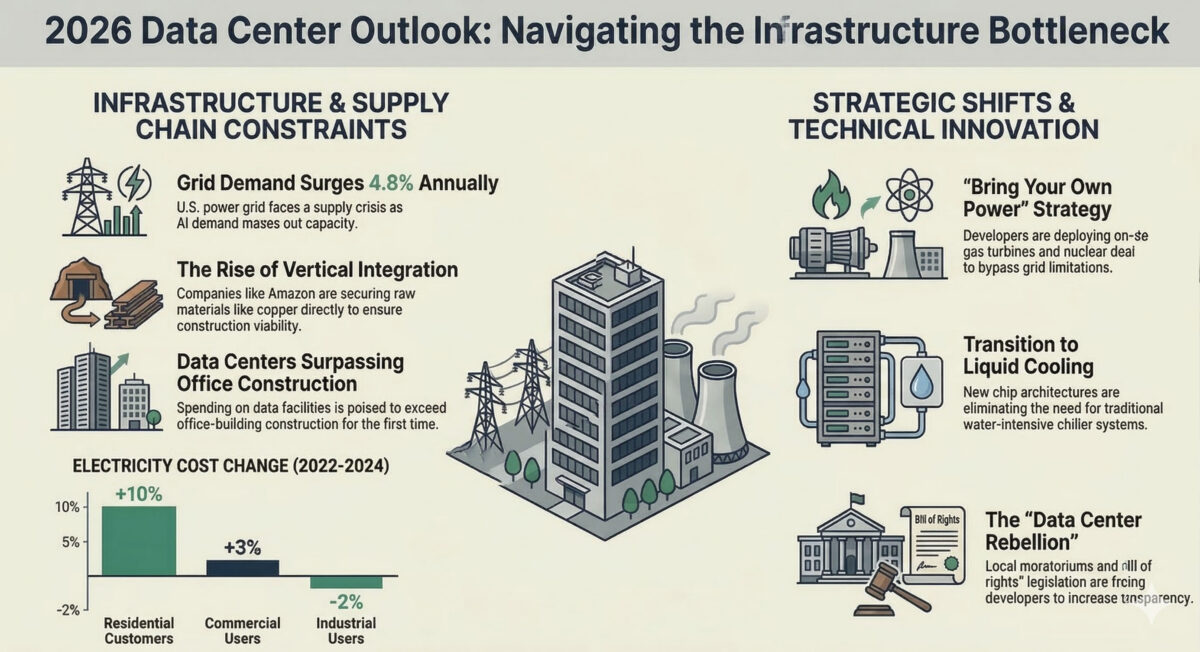
The most immediate challenge in 2026 is the sheer inability of the U.S. power grid to keep up with AI’s appetite. The strain is most visible in regions like PJM Interconnection (serving 13 states including Virginia’s “Data Center Alley”), where reliability risks have moved from “on the horizon” to “across the street”.

  • Consumer Costs are Spiking: Residential electricity prices have surged, creating a political flashpoint. In Washington D.C., costs jumped 93% over five years, and in New Jersey, rates spiked 20% in June 2025 alone. This has led to accusations that residents are subsidizing Big Tech’s power bill.
  • Tech Giants Pledge to “Pay Their Way”: Facing political pressure, companies like Microsoft have pledged to cover their own electricity costs to avoid burdening ratepayers.
  • Going Off-Grid: To bypass grid constraints, developers are effectively building their own power plants. We are seeing a surge in on-site generation, with companies buying natural gas generators from manufacturers like Caterpillar, whose power segment is now its fastest-growing business.

2. The Nuclear and Copper Renaissance

To solve the energy puzzle, the industry is reviving old technologies and securing raw materials directly at the source.

  • Nuclear Deals: 2026 is seeing a wave of nuclear power purchase agreements. Meta recently signed deals to buy power from Vistra Energy’s nuclear plants in Ohio and Pennsylvania, while Amazon has partnered with Talen Energy for nuclear power in Pennsylvania.
  • Vertical Integration: Tech giants are channeling Henry Ford by securing their supply chains from the ground up. Amazon recently signed a deal with Rio Tinto to secure copper from a mine in Arizona—the first new U.S. copper output in over a decade—acknowledging that AI factories cannot function without the physical wiring to conduct electricity.

3. The “Data Center Rebellion”

A “Not In My Backyard” (NIMBY) movement has gone national. What was once a quiet zoning process has turned into a “data center rebellion” reshaping local politics.

  • Moratoriums and Bans: Communities from Northville, Michigan to St. Charles, Missouri, are enacting moratoriums or rejecting projects outright due to concerns over noise, water usage, and aesthetics. In 2025 alone, billions of dollars in planned development were derailed by local opposition.
  • Legislative Guardrails: States like Wisconsin and Georgia are debating or passing legislation to protect ratepayers and strictly regulate water usage, requiring “closed-loop” cooling systems to prevent aquifer depletion.

4. Innovation vs. Obsolescence

As the physical footprint faces pushback, the technology inside the box is evolving rapidly to survive.

  • Liquid Cooling is Standard: With chip density increasing, air cooling is becoming obsolete. Vertiv predicts that “adaptive liquid cooling” will shape all future designs, and Nvidia’s CEO has stated that upcoming chip generations may eliminate the need for water chillers entirely.
  • The On-Device Threat: While construction booms, a counter-trend is emerging. Perplexity CEO Aravind Srinivas warned in early 2026 that the biggest threat to data centers is “on-device AI,” where processing happens locally on phones and laptops, potentially rendering massive centralized server farms less critical over time.

The Bottom Line for Investors

2026 is viewed as a “make-or-break” year for the AI trade. While spending on data center construction is poised to surpass office building construction for the first time, the risks are compounding. Investors are navigating a landscape where physical constraints (power, land, copper) and social license (community acceptance) matter just as much as the algorithms running on the servers.For a deeper breakdown of the infrastructure layers, power dynamics, cooling technologies, and geographic exposure shaping this cycle, explore our full Data Center Compendium.

AI Debt Market Analysis: Opportunities, Risks, and Investment Strategies

As artificial intelligence continues to reshape industries, the emerging AI debt market presents both opportunities and risks for investors. In this article, we will explore the current market dynamics, the implications of corporate debt risks, and practical strategies for making informed investment decisions. Learn how a deep understanding of this landscape can enhance your due diligence and competitive intelligence efforts.

Overview of the AI Debt Market

The AI debt market has emerged as a distinctive segment within the broader landscape of corporate finance, driven by the rapid advancement of artificial intelligence technologies and their integration into various industries. In recent years, the demand for AI-related funding has surged, leading to the proliferation of debt instruments specifically designed to support AI ventures. This growth is underpinned by increasing institutional interest in technology-driven innovation and the potential for strong returns in a sector marked by high scalability.

Investors can find a variety of AI-related debts, which typically include:

  • Secured loans: Often backed by the assets of AI startups, these loans present a lower risk for investors. They are increasingly popular as AI companies accumulate valuable intellectual property.
  • Convertible debt: This hybrid instrument allows lenders to convert their debt into equity, providing a safety net if the venture succeeds or the flexibility of potential equity upside in a burgeoning market.
  • Revenue-based financing: Tailored for AI firms, this structure ties repayment terms directly to revenue performance, aligning investor returns with company growth.

Key players in the AI debt market include specialized venture debt funds, traditional banks assessing AI creditworthiness, and strategic corporate investors looking to synergize their portfolio with AI advancements. Notable firms like Silicon Valley Bank and Trinity Capital have positioned themselves at the forefront, providing targeted financing primarily to AI-driven startups.

With AI revenues projected to reach $126 billion by 2025, according to a report by Gartner, the relevance of the AI debt market for both private equity and corporate investors cannot be overstated. Its appeal lies not only in the financial returns but also in the opportunity to conduct thorough due diligence on a sector ripe for transformation.

For corporate strategy and business development leaders, understanding the dynamics of the AI debt market is essential for competitive intelligence and risk assessment. Engaging with this market allows companies to position themselves strategically within the AI ecosystem while tapping into necessary resources for growth.

Related Articles

You might also be interested in:

Conclusions

The AI debt market is poised for growth, but it comes with significant risks that investors must navigate carefully. Understanding these dynamics is crucial for making informed decisions. To fully leverage the potential of this evolving landscape, consider comprehensive market research from SeventhBiz to gain deeper insights and structured analysis tailored to your investment strategy.

New Governor, Same Demand Curve: Will Policy Shift How Virginia Supports Data Centers?

A 30-Year Head Start

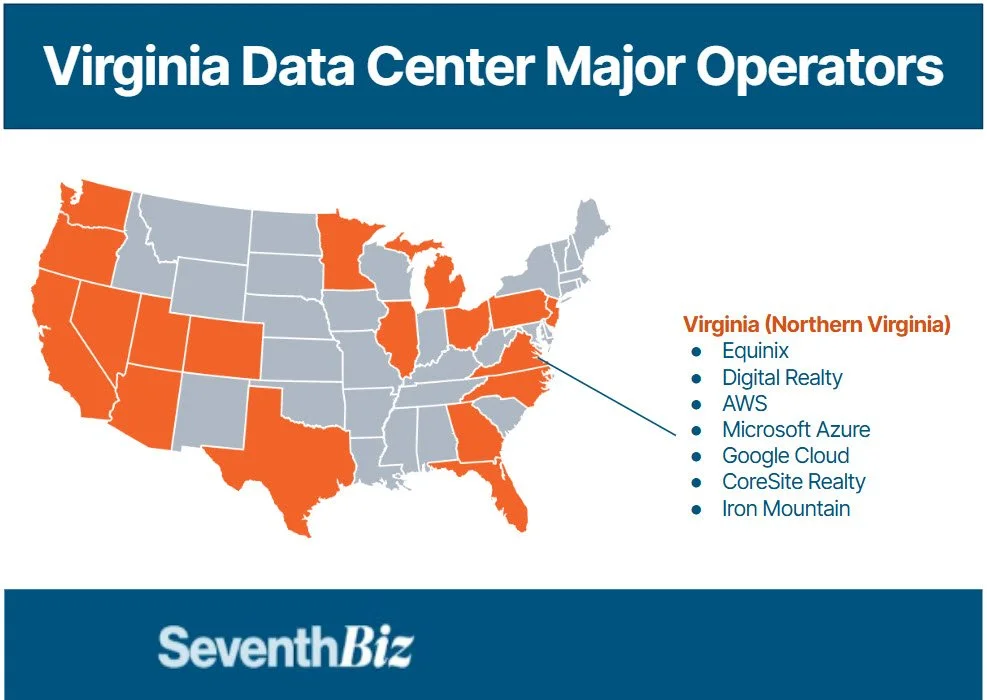
Northern Virginia’s rise began in the 1990s when early internet exchange points clustered around D.C. and spilled into Loudoun and Fairfax counties. That interconnection density attracted carriers, then colocation operators (notably the first large Equinix campus in Ashburn), and later hyperscalers. State and county policy reinforced the flywheel: a long-standing sales-and-use tax exemption on qualifying data center equipment, comparatively efficient permitting in business-friendly counties, and a deep bench of fiber, construction, and facilities talent created compounding network effects.

Power, Proximity, and Policy

Two ingredients then scaled the advantage. First, low-latency proximity to the federal government and East-Coast population centers made Northern Virginia a default first stop for enterprise and cloud footprints. Second, utility planning and transmission capacity—while now stressed—enabled multi-gigawatt campuses to phase in over time. Each new cluster reduced interconnection costs for the next, locking in the region’s leadership as “Data Center Alley.”

The Market Today: Scale, Stress, and a Sprawl Effect

Scale That Sets Global Benchmarks

Northern Virginia is still the largest data center market in the world by megawatts delivered and in-flight. Absorption remains dominated by a handful of hyperscale buyers, while wholesale colocation continues to pre-lease far ahead of delivery. Land values around established nodes (Ashburn, Sterling, Manassas) have re-rated meaningfully, and viable greenfield tracts near high-capacity substations are scarce.

Power is the New Zoning

The binding constraint is interconnection and transmission, not tenant demand. Utilities are creating bespoke rate classes and planning multi-year grid upgrades to serve AI-driven loads. Developers with firm power positions, adjacent substation optionality, or credible on-/near-site generation and storage have a durable edge. Capacity auction outcomes and fuel adjustments are feeding through to forward operating cost curves, making power procurement strategy as important as shell and fit-out.

The Sprawl Beyond Loudoun.

Permitting risk and transmission bottlenecks are pushing growth south and east along existing rights-of-way and toward metros like Prince William, Henrico (Richmond area), and further into Southern Virginia locales with available land, favorable local tax treatment, and co-op utility partnerships. Where entitlements are contested, timelines and carrying costs are rising; where local policy is coordinated with utilities, time-to-power remains the key differentiator.

Virginia’s Governor’s Race: What the Outcome Could Mean for Data Center

Baseline to assume: Virginia’s long-running posture has balanced growth with guardrails. The election outcome does not change underlying demand from cloud and AI workloads; what it can influence are cost of power, permitting velocity, and incentive shape. Three practical scenarios to watch:

  1. “Conditioned incentives” over “open-ended incentives.” Expect continuity on the equipment sales-and-use exemption framework, with a higher likelihood of eligibility tightening (energy-efficiency thresholds, reporting, or community-benefit conditions). For developers, this mostly affects underwriting (qualification risk, compliance costs) rather than headline feasibility.
  2. Faster grid investment paired with stronger cost-allocation pushes. AI load growth already requires large transmission and generation spend. A Democratic administration is more likely to lean into build-out (transmission, storage, and clean power) while pressing for data centers to “pay their share,” via targeted rate classes, rider structures, or proffers when local impacts are material. Net effect: higher all-in power costs for greenfield campuses lacking locked contracts, partly offset by improved delivery certainty and reputation benefits from cleaner supply.
  3. Land-use and siting: more predictability where plans are aligned, longer timelines where they aren’t. Highly contested mega-corridors will face tighter procedural scrutiny; counties with updated comp plans, industrial overlays, and utility-backed capacity maps will move faster. For investors, this favors portfolio strategies with multiple sites across counties/utilities and option-style control on parcels adjacent to robust transmission.

Bottom Line for Capital Allocation

The demand signal (cloud + AI) is durable; Virginia’s comparative advantages remain formidable. Policy drift points to modestly higher capex/opex and more structured incentives, but also to clearer rules of the road for power-constrained projects. Sponsors that secure long-lead power, embed efficiency and onsite-resource plans, and cultivate county-utility alignment should continue to out-compete on delivery and returns.

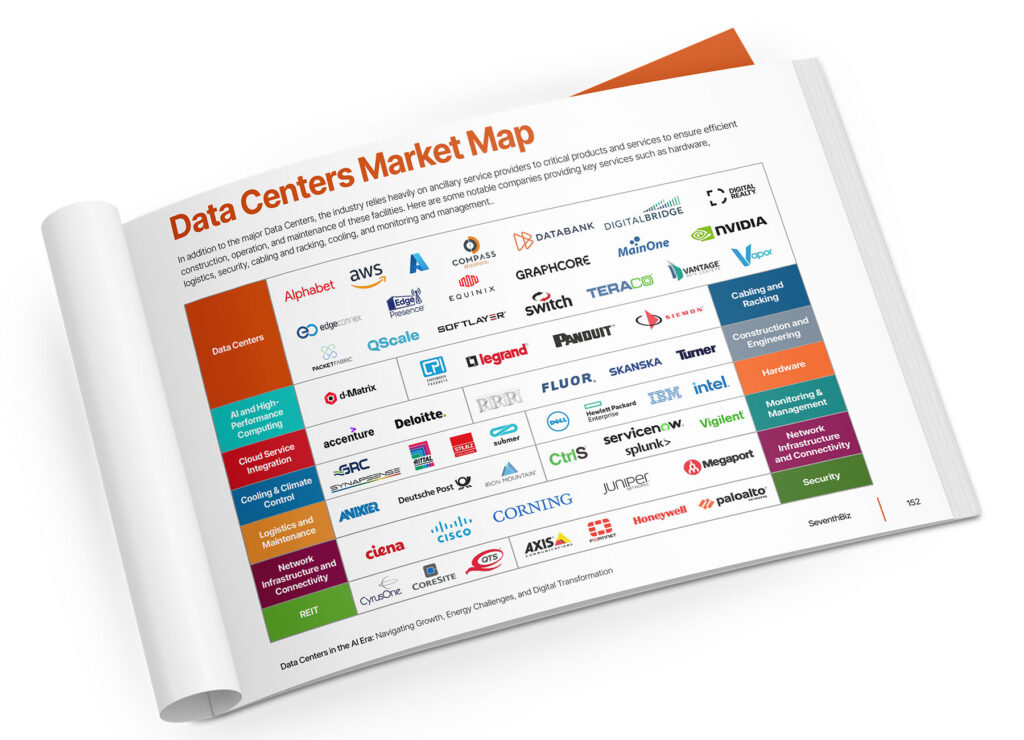
Data center demand in Virginia is part of a much larger national acceleration. Hyperscale and AI workloads are driving record leasing, record pre-commitments, and a shift from “build it and lease it” to “lease it before it’s built.” For investors, developers, and operators trying to understand where capital is flowing next, our flagship industry analysis—Data Centers in the AI Era: Navigating Growth, Energy Challenges, and Digital Transformation—breaks down the economics behind this surge. The report covers market size, growth drivers, power constraints, REIT dynamics, tax incentives, and the evolution of hyperscale and AI-optimized facilities. It also maps where demand is shifting as power availability becomes the new limiting factor.

If you’re evaluating sites, investment theses, or partnerships in digital infrastructure, this report provides:

  • A full industry primer (market size, TAM, and regional growth hubs)
  • Financial and operational dynamics (power costs, CapEx/OpEx structure, REIT advantages)
  • Competitive landscape across hyperscale, colo, edge, and AI-accelerated facilities
  • Analysis of grid strain, energy procurement, and sustainability requirements
  • A directory of operators, vendors, investors, utilities, and ecosystem partners

Stay tuned for when we release a Virginia-focused deep dive—mapping substations, power constraints, and development windows across Northern Virginia and emerging submarkets.