AI Market Analysis for Investment Decisions in Volatile Markets
SeventhBiz
Key Takeaways
Understanding AI’s role is crucial for navigating stock market fluctuations.
Due diligence is essential for mitigating risks associated with technology investment strategies.
Data-driven insights can lead to informed decision-making in uncertain market environments.
Custom research from SeventhBiz can provide structured analysis tailored for your needs.
As stock market volatility becomes a defining feature of today’s economy, understanding the impact on technology investments has never been more critical. This article delves into AI’s role in shaping investment strategies amidst market unpredictability. Discover insights that can sharpen your decision-making process and enhance your competitive intelligence.
Moreover, adapting investment strategies to include AI technologies enhances firms’ capabilities. For example, a leading private equity firm recently integrated an AI-driven analytics platform into its due diligence process. This helped the firm identify potential risks and opportunities in target companies more swiftly than traditional methods. By doing so, they increased their competitive edge during negotiations.
Similarly, venture capital firms now use AI tools for predictive analytics. These tools forecast startup performance by analyzing multiple variables, such as market sentiment and competitor activity. Consequently, this approach reduces the risk of unsuccessful investments. In contrast, traditional methods often rely on historical trends, which may not accurately predict future challenges.
Corporate strategy leaders also see value in AI-driven market insights. They can utilize AI to optimize their merger and acquisition (M&A) decisions, ensuring they target firms that align strategically. For instance, one tech giant used AI to assess the cultural fit of potential acquisitions, positively impacting post-merger integration success rates.
Investors must embrace AI’s capabilities to remain competitive. By incorporating AI market analysis, they can make informed decisions faster and assess risk with greater accuracy. The firms that adapt to these technological advancements will likely outperform their peers, ultimately leading to better returns on investment.
Overview of AI’s Impact on Investment Strategies
Artificial intelligence (AI) has become a transformative force in the investment landscape. Investors now leverage AI market analysis to navigate market volatility more effectively. AI’s ability to process vast amounts of data allows firms to identify patterns and trends that inform timely investment decisions.
Moreover, adapting investment strategies to include AI technologies enhances firms’ capabilities. For example, a leading private equity firm recently integrated an AI-driven analytics platform into its due diligence process. This helped the firm identify potential risks and opportunities in target companies more swiftly than traditional methods. By doing so, they increased their competitive edge during negotiations.
Similarly, venture capital firms now use AI tools for predictive analytics. These tools forecast startup performance by analyzing multiple variables, such as market sentiment and competitor activity. Consequently, this approach reduces the risk of unsuccessful investments. In contrast, traditional methods often rely on historical trends, which may not accurately predict future challenges.
Corporate strategy leaders also see value in AI-driven market insights. They can utilize AI to optimize their merger and acquisition (M&A) decisions, ensuring they target firms that align strategically. For instance, one tech giant used AI to assess the cultural fit of potential acquisitions, positively impacting post-merger integration success rates.
Investors must embrace AI’s capabilities to remain competitive. By incorporating AI market analysis, they can make informed decisions faster and assess risk with greater accuracy. The firms that adapt to these technological advancements will likely outperform their peers, ultimately leading to better returns on investment.
Implications of Market Conditions for Private Equity and Corporates
The current market volatility shapes the landscape for private equity firms and corporate investors. As uncertainty looms, deal-making strategies must adapt. Investors should prioritize a rigorous AI market analysis to uncover opportunities that may otherwise remain hidden.
Market fluctuations influence valuations heavily. Previously reliable multiples may no longer hold true. Investors must:
Reassess valuation frameworks based on real-time data rather than historical trends.
Incorporate AI insights to predict valuation adjustments during economic shifts.
Utilize scenario analysis to gauge potential impacts of changing market conditions.
Furthermore, deal sourcing has become more critical. Corporates should foster relationships with startups and emerging companies that face less traditional competition. AI can assist in:
Identifying high-potential targets through predictive modeling.
Assessing market trends faster than competitors, allowing for timely decisions.
Risk assessment takes on new dimensions in volatile markets. Investors must integrate AI tools for due diligence. These tools can:
Evaluate financial health and operational efficiency through comprehensive data analyses.
Spot potential regulatory changes or shifts in consumer behavior that could impact investments.
Adapting to market volatility requires agility. Firms should not only react to changes but also anticipate them. Leveraging AI market analysis allows investors to stay ahead, turning volatility into opportunity. By embracing innovative valuation strategies and thorough risk assessments, firms can navigate the shifting landscape effectively and maintain their competitive edge.
Leveraging Research for Strategic Advantage in Volatile Markets
Market volatility poses significant challenges for investors, making strategic decision-making imperative. To navigate this landscape, private equity and venture capital professionals, alongside corporate strategists, should leverage structured research and competitive analysis. Firms like SeventhBiz offer tailored insights that enhance decision-making during turbulent periods.
To develop market resilience, consider the following practical steps:
Conduct thorough market analysis: Regularly analyze emerging trends and shifts in consumer behavior. Use AI market analysis tools to forecast demand shifts and identify new opportunities.
Competitor Benchmarking: Examine competitors’ performance through comprehensive benchmarking. Understanding their strengths and weaknesses allows you to position your investment more strategically.
Scenario Planning: Implement scenario-based planning to anticipate various market conditions. This helps you visualize potential outcomes and prepare appropriate responses.
Risk Assessment Frameworks: Utilize frameworks that assess financial and operational risks. Align your findings with strategic goals to ensure informed decision-making.
For example, a venture capitalist may utilize SeventhBiz’s data to analyze the tech sector and competitors. By examining acquisition patterns and emerging startups, they can identify undervalued assets ripe for investment, enhancing their portfolio’s resilience.
Furthermore, integrating AI market analysis can uncover insights into market dynamics that traditional methods often miss. Investors who embrace these methodologies gain a deeper understanding of their competitive environment. Consequently, they can pivot strategies in response to real-time data rather than relying on outdated information.
In conclusion, structured research not only bolsters due diligence but also equips investors with the intelligence needed to thrive amid uncertainty. Prioritizing actionable insights ensures that firms remain proactive rather than reactive, ultimately enhancing their market position during volatile times.
In a volatile stock market, leveraging AI for investment due diligence is essential. By understanding market dynamics and trends, you can navigate uncertainties with confidence. For deeper insights tailored to your needs, consider our custom research services at SeventhBiz.
Frequently Asked Questions
How does AI influence investment strategy during market volatility?
AI enhances data processing and analytics, allowing investors to identify trends and patterns quickly, leading to informed decision-making.
What are the key factors driving stock market volatility?
Economic indicators, geopolitical events, and technology sector developments are primary drivers of volatility impacting investment strategies.
Why is due diligence important in volatile markets?
Due diligence helps investors assess risks accurately and ensures a thorough understanding of market dynamics before making investment decisions.
How can SeventhBiz assist in navigating market volatility?
SeventhBiz provides in-depth market research and competitive analysis, tailoring insights to help clients navigate the complexities of volatility.
Key Takeaways Understanding AI’s role is crucial for navigating stock market fluctuations. Due diligence is essential for mitigating risks associated with technology investment strategies. Data-driven
Key Takeaways The AI stock surge offers significant investment potential driven by technological advancements. Understanding market dynamics is essential for identifying both opportunities and risks.
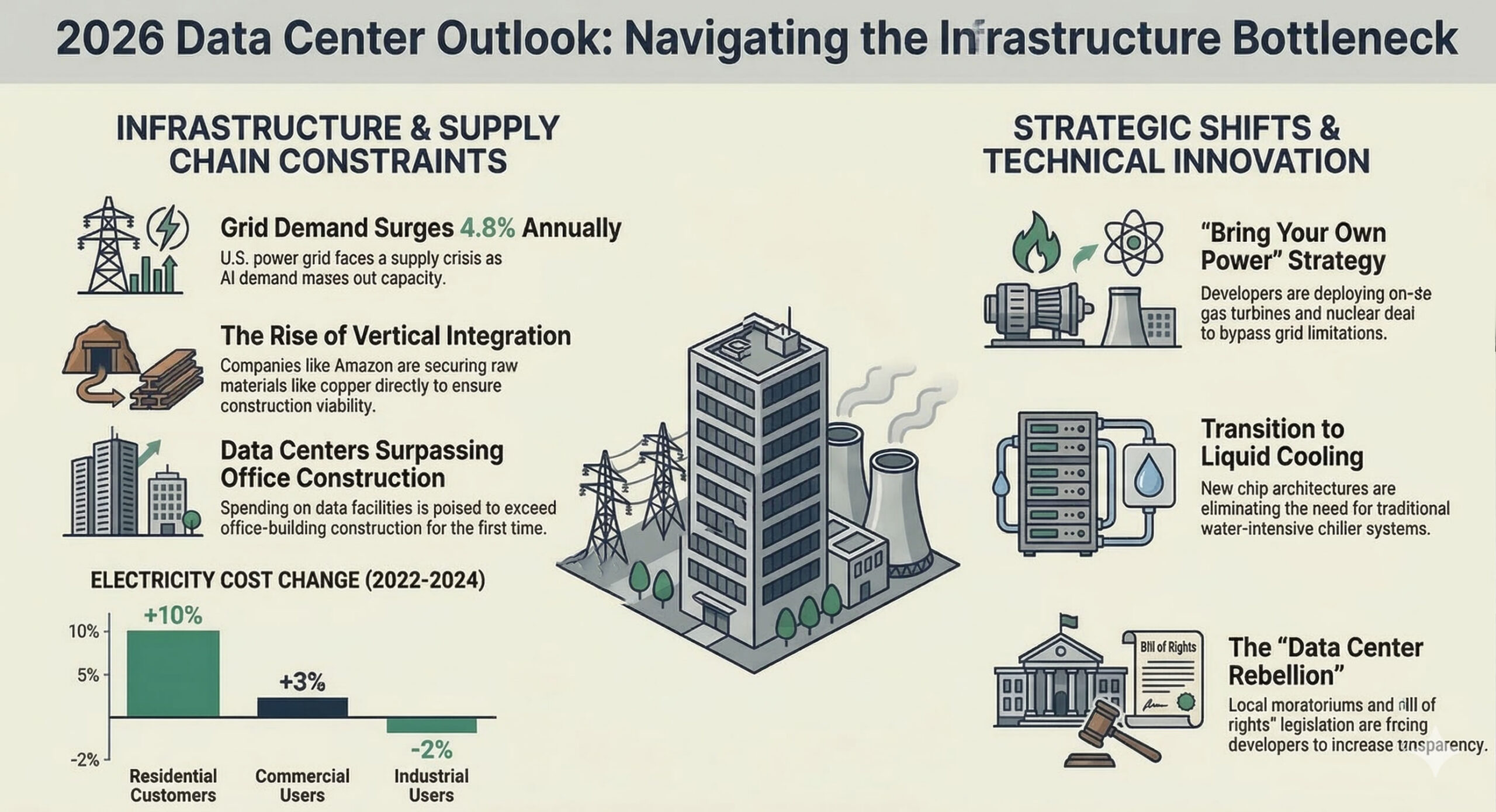
As we move deeper into 2026, the data center industry sits at a volatile intersection of limitless demand and physical reality. While the artificial intelligence
As artificial intelligence continues to reshape industries, the emerging AI debt market presents both opportunities and risks for investors. In this article, we will explore
A 30-Year Head Start Northern Virginia’s rise began in the 1990s when early internet exchange points clustered around D.C. and spilled into Loudoun and Fairfax